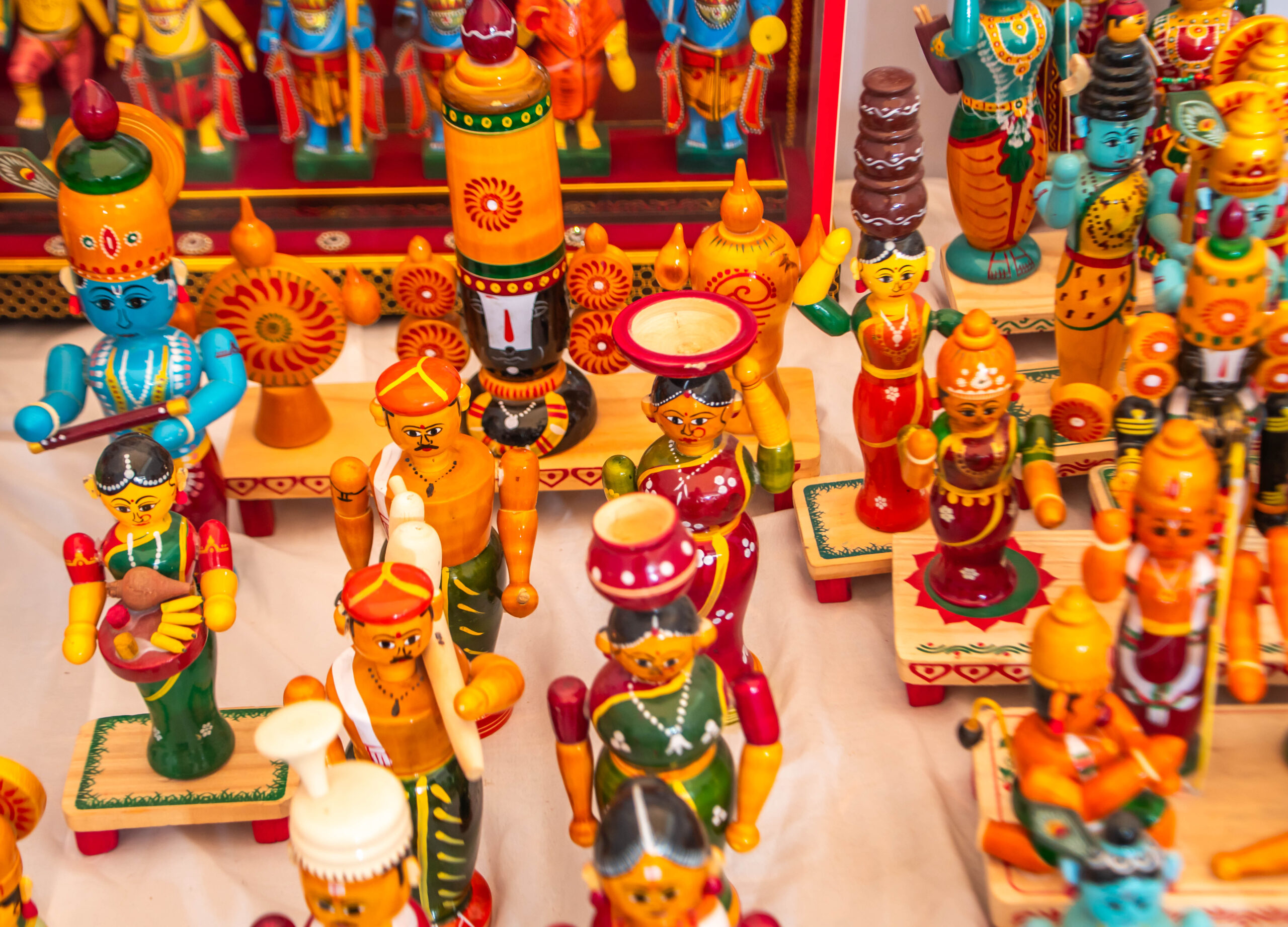
Having lived in Vijayawada for over six decades, Kondapalli toys and Kondapalli fort evoke deep sentiments that we usually associate with the village we are born in and are attached to. The first thrill I had climbing the hill, through the obsolete, rugged route, was when I was twelve. It was with my classmates.

After decades of negligence, I find that the authorities have recently focused on creating a few tourist-friendly amenities. After each visit, I feel happy to find a few additions to the “Qhilla”, the fort. Its upkeep, security, and some control over the crowds of miscreants whose objective seems to be to deface the fort’s 400-year-old ramparts.


A few days ago, I saw an announcement. It’s about the Kondapalli festival, a three-day event fittingly planned for World Heritage Day. Surprisingly, the details of the celebrations were all over social media – attractive, colorful, and quite professional.
I decided I have to be there, though the summer temperatures are casually hovering above 40 °C.

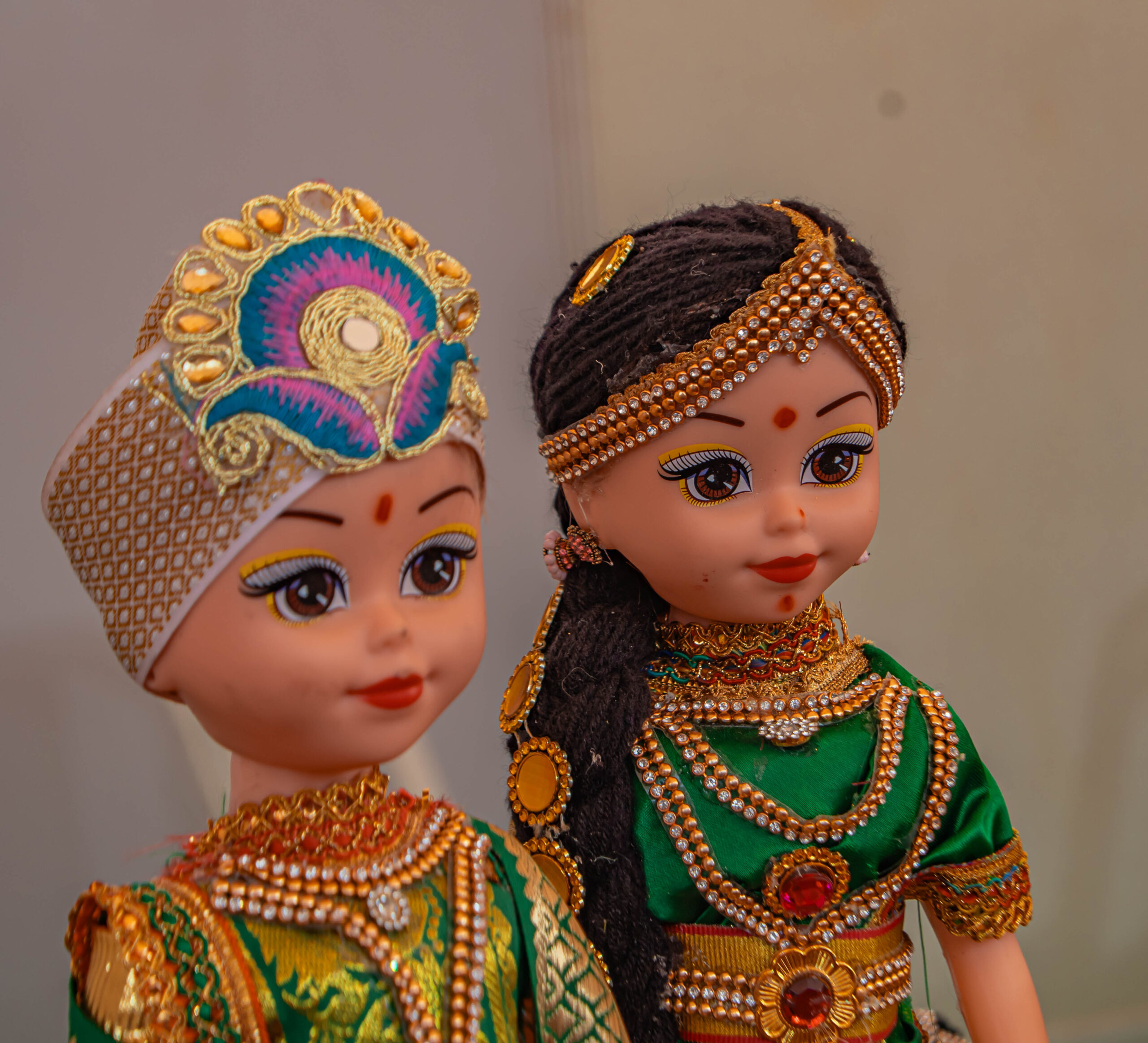
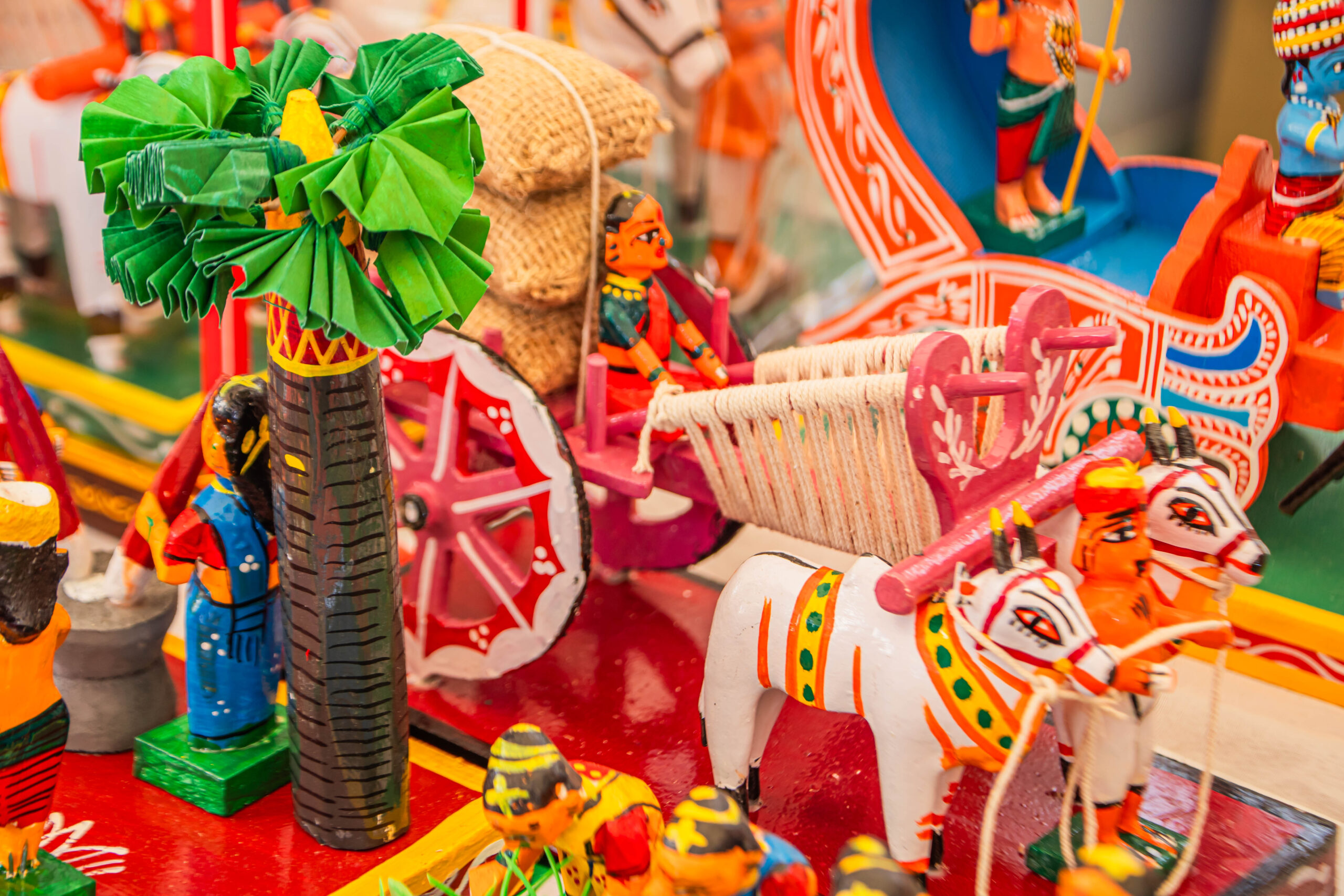
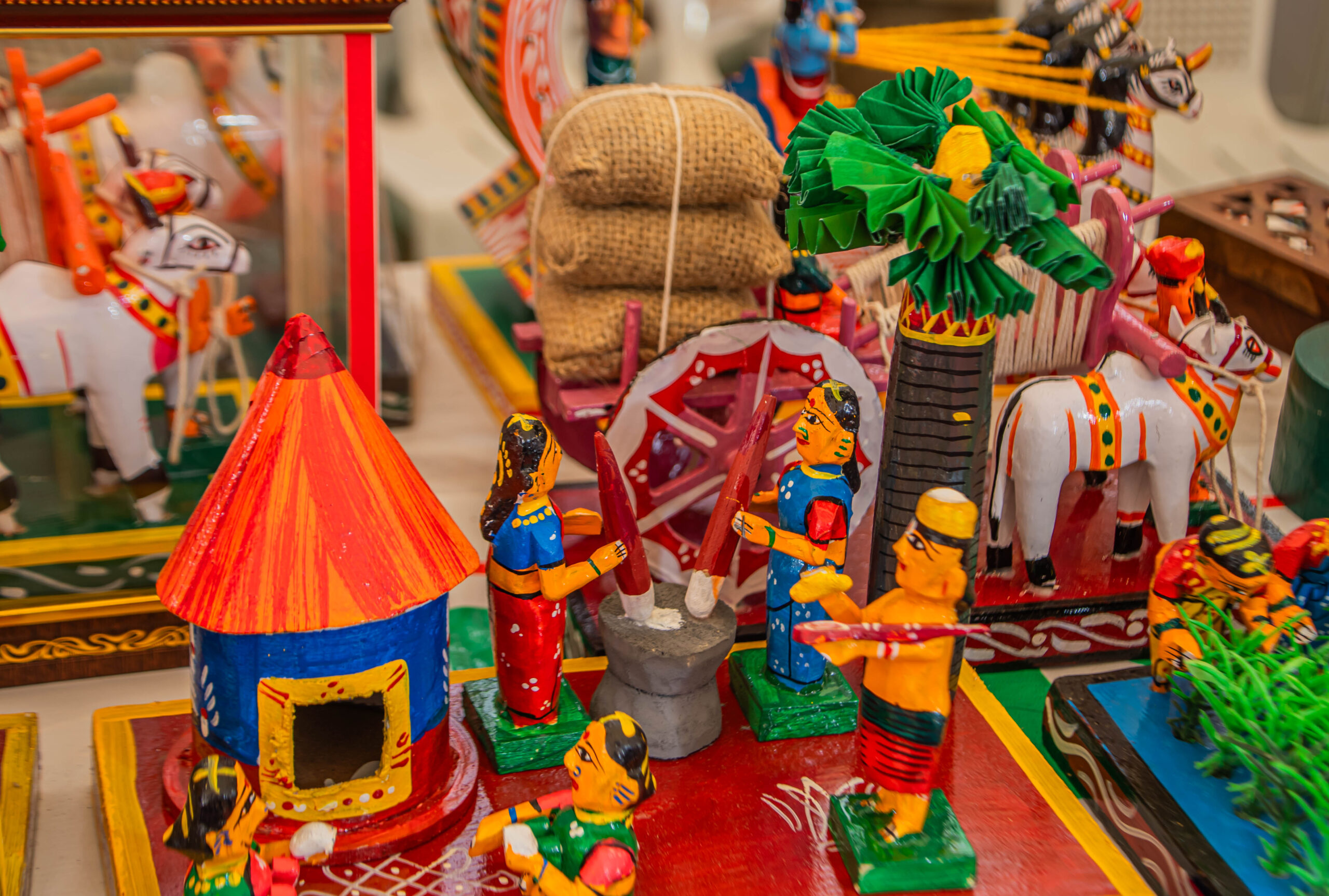
I was there on the first day of the event. For more than three hours, I went around the exhibition stalls, of course, my camera tagging me. The heart of Kondapalli craftsmanship is on a colorful display.
At this point, let me introduce the village of Kondapalli and its historical antecedents.


Kondapalli is a quiet village nestled amidst low hills and whispering groves. There are about 50 dedicated families of handicraftsmen, mostly from Rajasthan. It’s said that they migrated generations ago at the invitation of kings who ruled the region. They live alongside other native artisans and uphold the tradition that has breathed life into wood for over four centuries. The artisans of Kondapalli are not merely craftsmen; they are storytellers, shaping history, culture, and imagination into delicate wooden figures known as Kondapalli toys, or ‘bommalu.’

The origins of this craft date back to the 16th century, where it was nurtured under the patronage of local rulers who recognized the artisans’ unique talent.

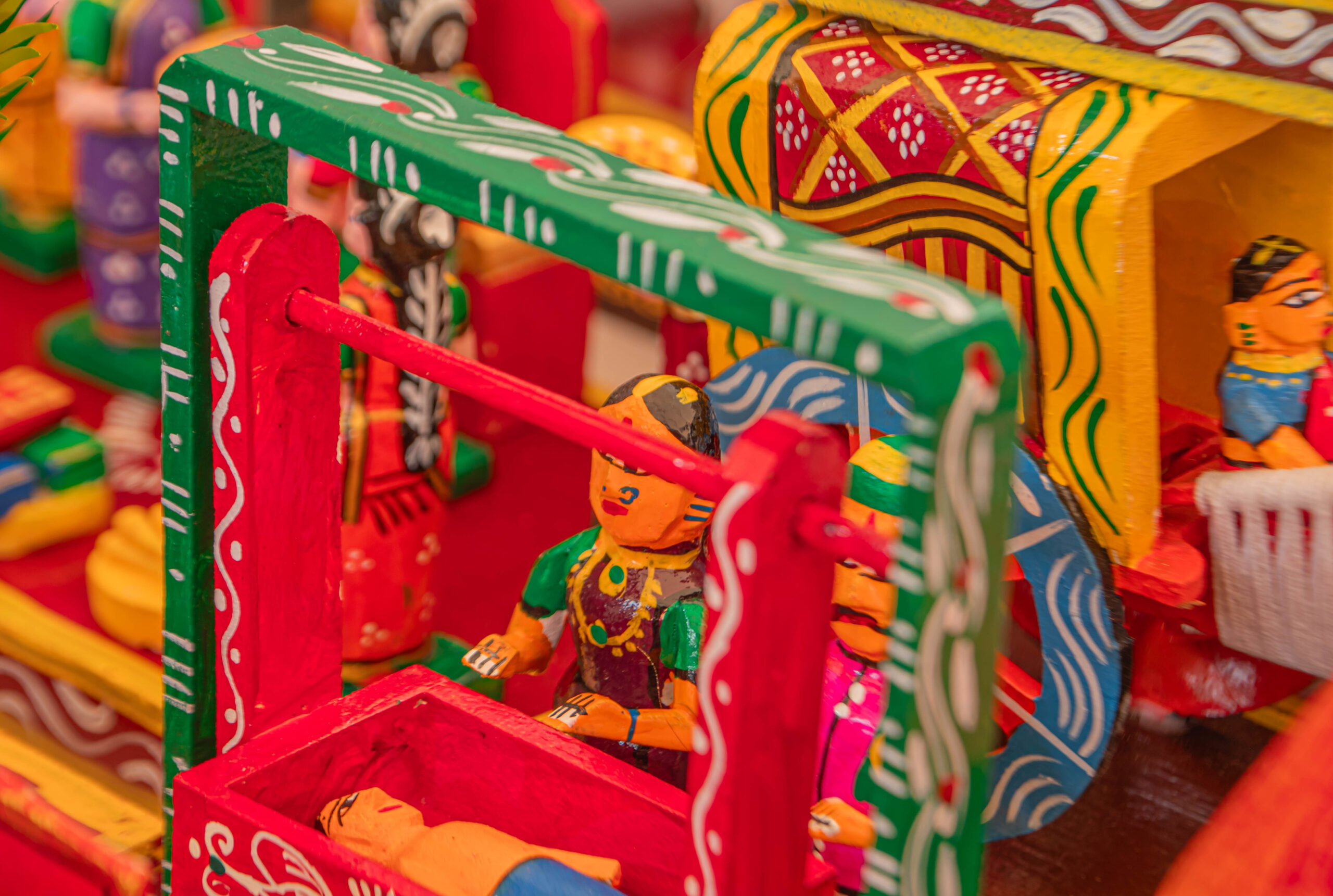
At the heart of Kondapalli craftsmanship lies a special kind of softwood called Tella Poniki (Gyrocapus jacquini). It was used for its lightweight, easy-to-carve nature; this wood allows artisans to sculpt intricate forms of exceptional beauty.

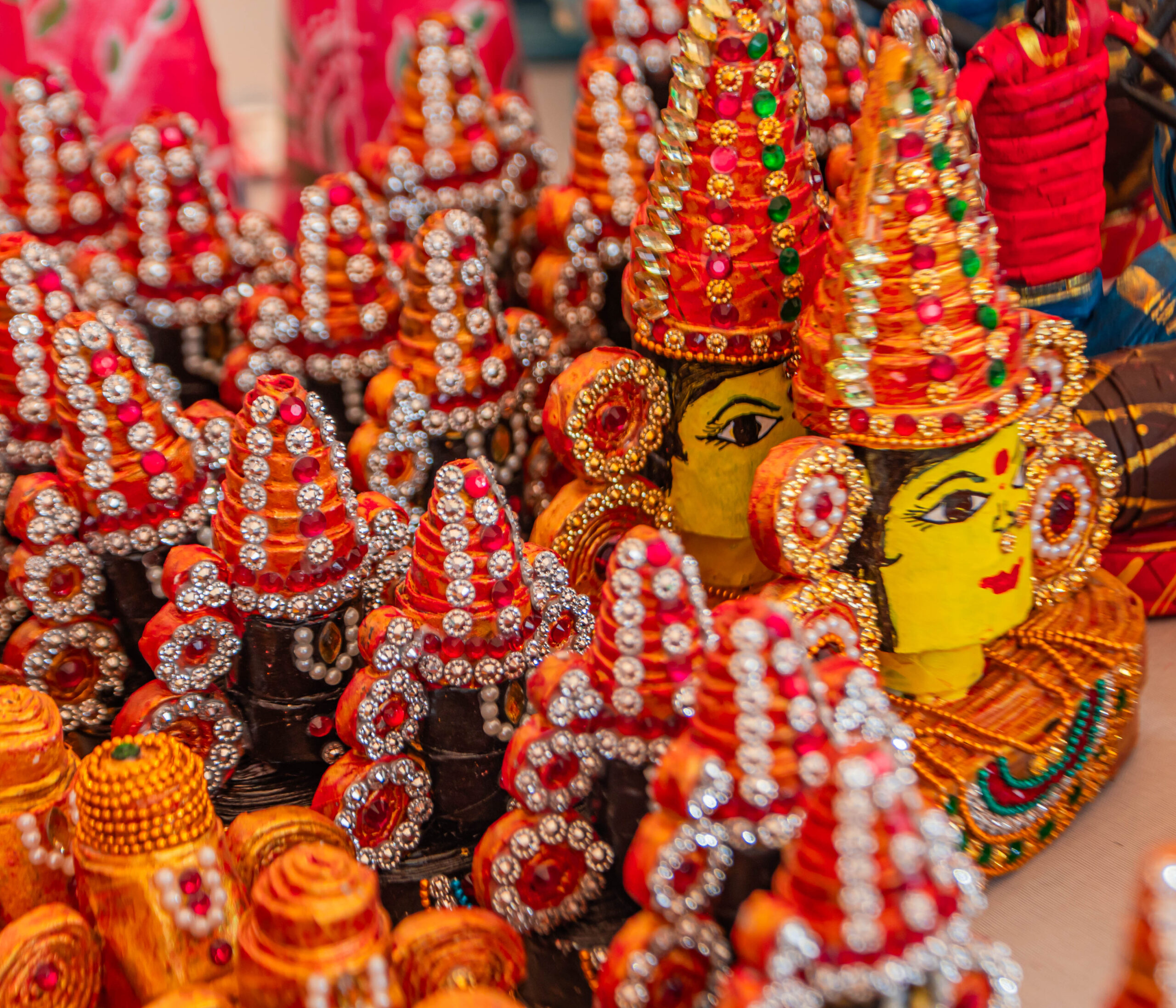
For the toy-making passion, we find there aren’t any modern workshops. There is not much automated equipment that comes in handy either. Curiously, each toy is carved and coloured by the flawless creative hands of sculptors. Yet, we will be amazed to see the supple wood transform into colorful toys that aesthetically represent memory, culture, and emotion. We find here the artistry is not just about creating toys; it is about safeguarding a story—one that deserves to be seen, cherished, and passed on.

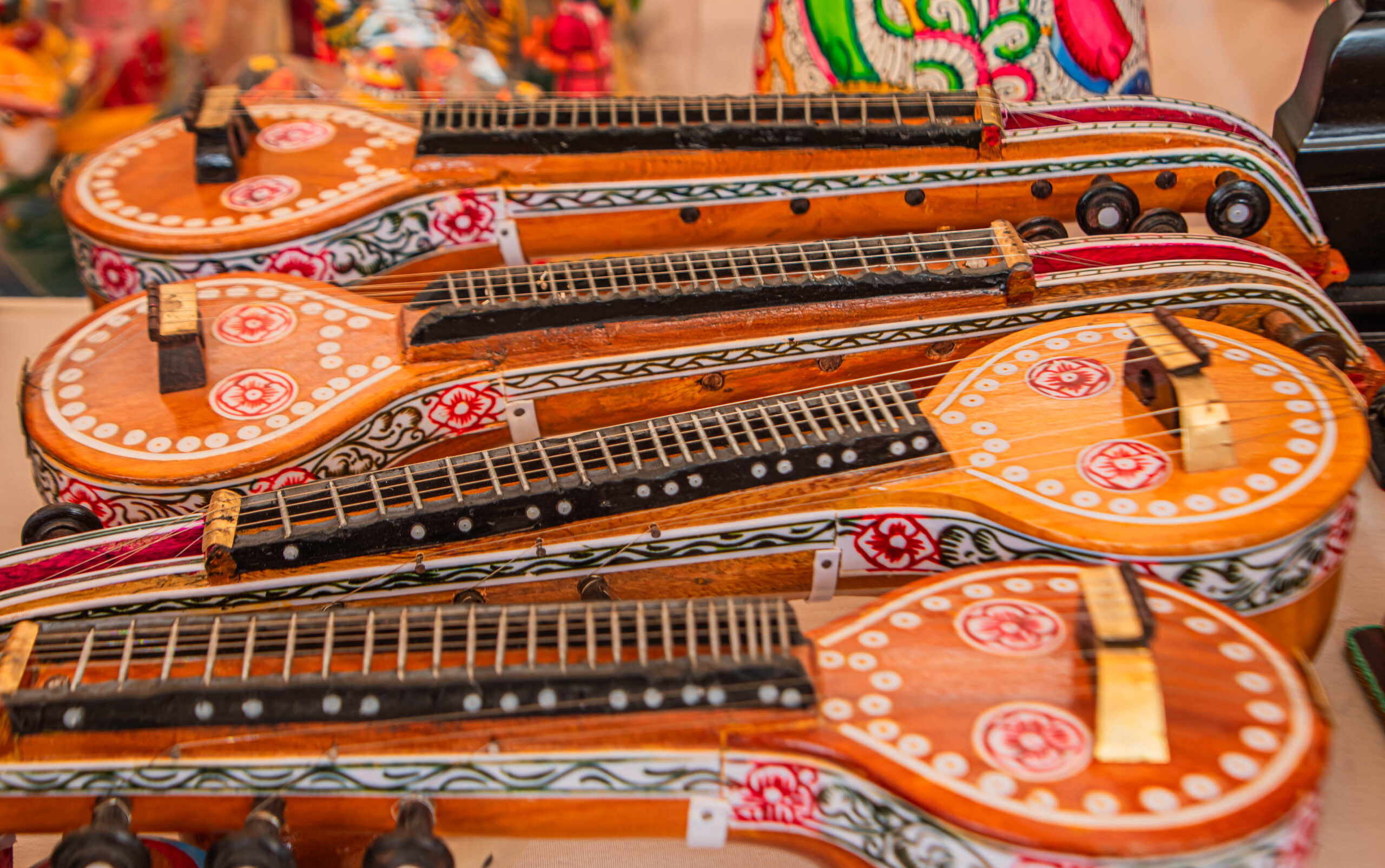
As we hold a Kondapalli carving, we do not simply admire its beauty; we hold a fragment of history, shaped with love, resilience, and an enduring human spirit – waiting to be kept safe in the hands of future generations.