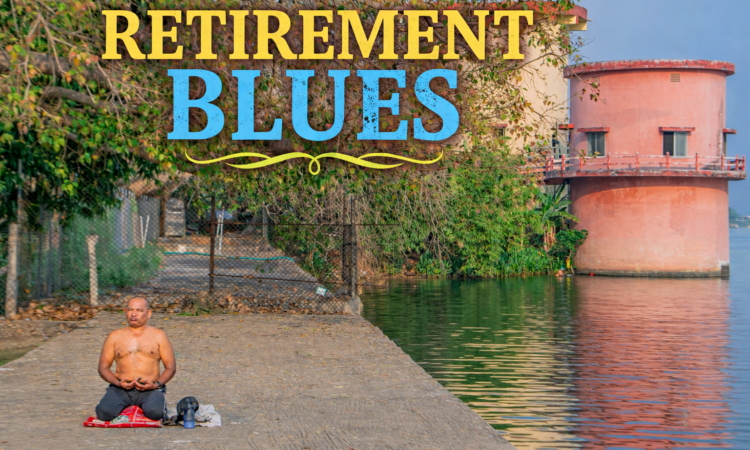
I used to believe that aging well meant doing something—anything—just to keep moving. Stay active. Stay engaged. Stay busy. That was the chorus I heard everywhere, and I followed it without question. But now, sitting here in the quiet aftermath of a life once filled with urgency, I ask: why did no one ever say, “Learn to sit with yourself and not twitch”?

Retirement has not brought me peace. Instead, it has exposed me. I have become a restless version of myself—someone I hate to admit. I cannot sit still, not even for a few minutes. My mind hunts for tasks the way it once chased deadlines, as if I have to prove myself to an invisible audience that I’m still worthy, watching over me, judging my value by my busyness. I began to suspect that idleness is a fault I must correct immediately.

Thirty years. Thirty years of teaching, managing my school, guiding others—yet I failed to learn the most basic lesson for myself: how to rest. How ironic. I taught discipline, structure, purpose—but never stillness. Now I sit here, a retired man who does not know how to sit for a minute without that shred of guilt.

Today I’m seeking a fantasized version of life: the idea of slouching on a couch, holding a cup of coffee, watching a movie in a most relaxed comfort. Why do I feel it like a luxury now? Why does relaxation feel like a wrongdoing? Somewhere along the way, I trained myself to believe that rest is weakness, that stillness is failure. And now, I am paying the price for that sentiment.

I speak to myself now, almost accusingly: What have you done to your own mind? Why does it refuse to listen? Why does it drag you from one meaningless task to another, as though idleness itself is something to fear?

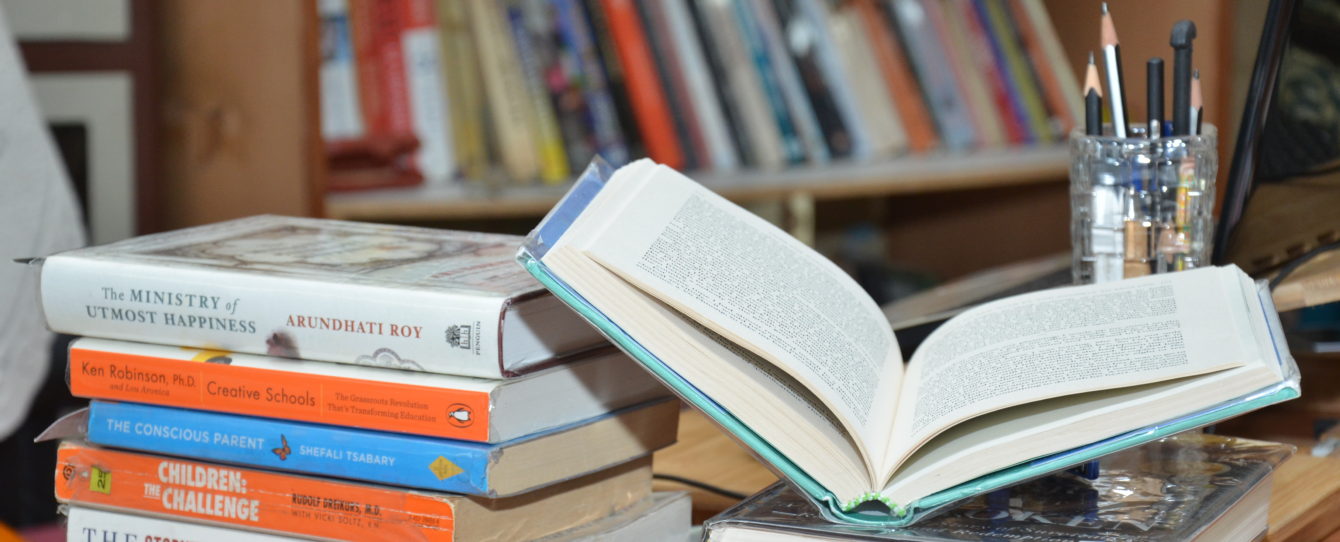
I have read countless books—self-help, philosophy, reflections on life—but none truly prepared me for this. No one taught me how to sit with myself without discomfort. No one told me how to stop this endless internal argument. I am not trying to empty my mind anymore—I realize that now. I am only trying to stop fighting with it. But even that feels like a battle I am losing.

When I was younger, I wore my busyness like a badge of honor: “I’m busy, I can’t spare a minute.” I said it with pride, with arrogance even. But now, those words echo back at me like a quiet regret. Was I running from something all along? And if so, what am I gaining now from this forced activity?

I long for a kind of surrender—a gentle letting go. I was seeking a way to ease into days that are not driven by urgency but by breathing easy. But I don’t know how. And perhaps that is the hardest truth I must face: after a lifetime of knowing what to do, I no longer know how to simply be.

And so I sit here, not at peace, but learning—slowly, painfully—to stop running from myself.

